Social media platforms let organisations share content quickly, interact with audiences and
target specific groups with adverts. Posts, stories, reels and live streams all play a role
in modern media campaigns.
What is Social Media in iMedia?
Social media refers to platforms and apps where users can create, share and interact with
content. Examples include Instagram, TikTok, Snapchat, X (Twitter), Facebook and YouTube.
For media products and campaigns, social media is used to share trailers, teasers, behind-the-scenes
clips, competitions, polls and links. It allows two-way communication between producers and audiences.
Key points you must remember
Social media allows users to create, share and comment on content.
It is often used alongside traditional media as part of a bigger campaign.
Content can be highly targeted using hashtags, promoted posts and user data.
Engagement (likes, shares, comments) can be tracked and analysed with analytics tools.
Organisations must still follow laws, regulations and platform guidelines when posting.
Social Media at a Glance
These infographics summarise how organisations use social media and the key advantages
and risks you can write about in the exam.
How Organisations Use Social Media
Platforms, posts and interactions used to support a media campaign.
Share trailers, teasers and behind‑the‑scenes clips.
Post still images, posters, memes and short updates.
Use stories, reels and shorts for quick, visual content.
Run competitions, polls and Q&A sessions to boost engagement.
Collaborate with influencers and partners to reach new audiences.
Link out to websites, streaming services or online shops.
Content types · Campaign activities
Advantages & Risks of Social Media
Useful points for 2–4 mark questions and 9‑mark discussions.
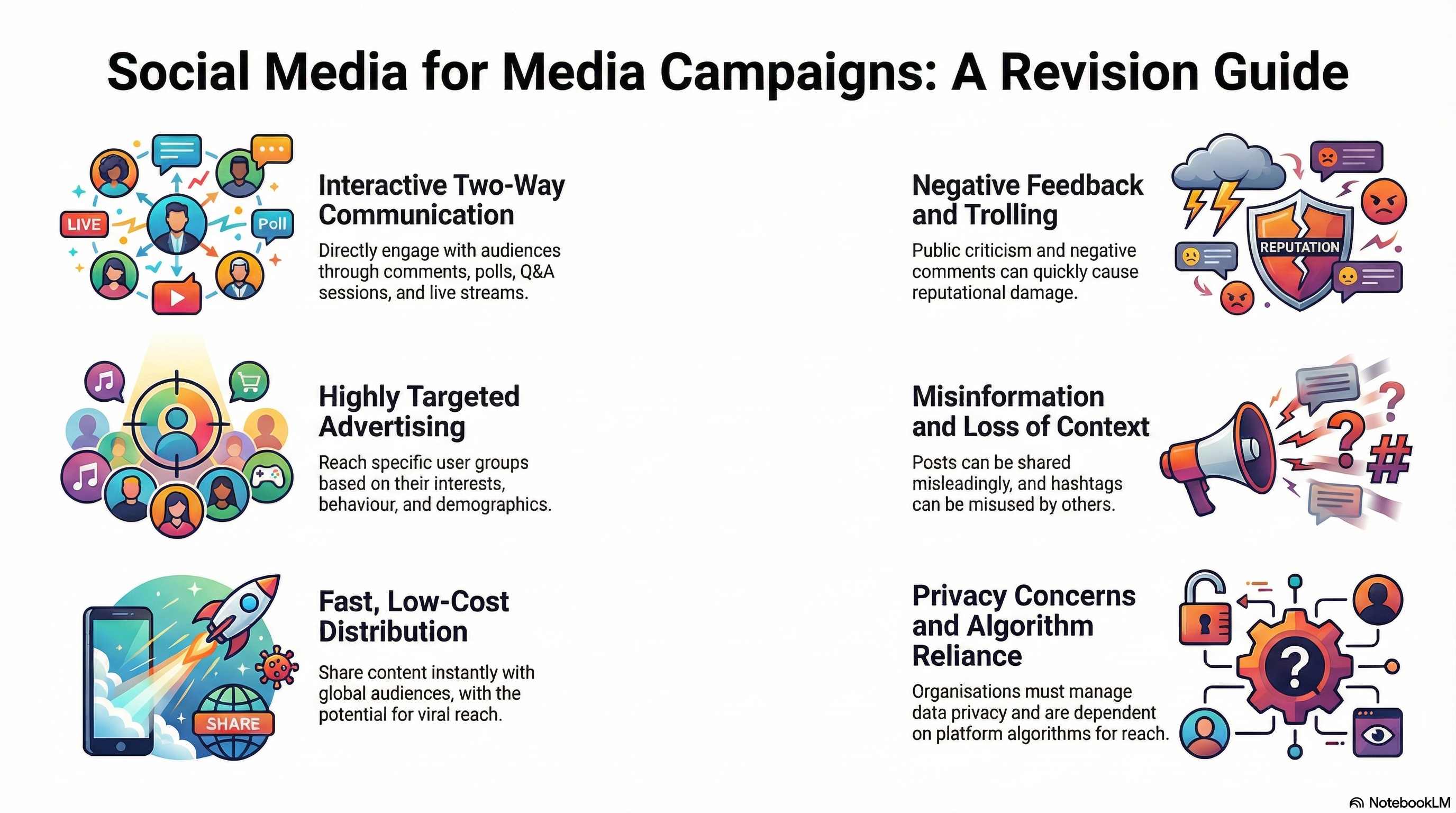
Advantages: interactive two‑way communication with audiences.
Advantages: highly targeted adverts using interests and behaviour.
Advantages: fast, low‑cost distribution with viral potential.
Risks: negative comments, trolling and reputational damage.
Risks: misinformation, misuse of hashtags or posts being shared out of context.
Risks: privacy concerns and over‑reliance on platform algorithms.
Use these games to practise how social media fits into campaigns, how it differs from
traditional media and how to choose suitable platforms and content for a target audience.
All topics
iMedia Genius
The flagship exam-style quiz covering every R093 question type: MCQs, short answers,
binary questions, bonus rounds and timed scoring.
Exam-styleAll R093 contentMixed difficulty
Media industry
Sector Sorter
Drag-and-drop game sorting traditional vs new media, products and job roles.
Perfect for Section A media industry questions.
MCQsSectorsJob roles
Product design
Client Brief Detective
Race the clock to find key information in client briefs: purpose, audience,
timescales, ethos and constraints.
Short answersClient briefConstraints
Social media
Social Media Strategy Arena
Pick the best platforms, content types and tactics to hit campaign goals and improve engagement.
Arcade quizPlatformsEngagement
Exam Practice – Social Media (AI Marker)
Write your answers in the boxes below, then click Build & Copy AI Marking Prompt. Choose an AI tool and paste the prompt to get examiner-style marking and feedback.
Q1. State one way a company can use social media to promote a new product. (1 mark)
Technique: Give one clear example such as posting teaser images,
sharing a short video, running a competition or using paid adverts.
Q2. Explain one advantage of using social media instead of posters to reach teenagers. (2 marks)
Technique: Make a clear point about where teenagers spend time or
how they interact with content, then explain the impact on reach or engagement.
Q3. Describe one way a hashtag campaign can increase audience engagement. (3 marks)
Technique: Describe how the hashtag works, then develop your answer
by explaining how it encourages sharing, conversation or user-generated content.
Q4. Explain two risks that an organisation should consider when using social media for a campaign. (4 marks)
Technique: Give two separate risks (e.g. negative comments, misleading posts,
privacy issues). For each one, explain the possible impact on the organisation or audience.
Q5. A film company is using social media to promote a new superhero film. Discuss the advantages
and disadvantages of using social media as the main platform for the campaign. (9 marks)
Technique: Cover both sides. Include targeting, interactivity, sharing and
analytics, but also risks such as negative feedback, information overload and excluding
audiences who are not online. Finish with a justified conclusion.